Pieces and play space
Start with the surface
Measure a clear rectangle using a ruler. Compare its width and height with the stated finished dimensions, leaving additional space for loose pieces. A box measurement describes storage, not the completed scene. Keep the surface stable and avoid edges where removable parts can fall.
Compare exact records
| Activity | Footprint and pieces | Guidance |
|---|---|---|
| Harbour Shape Sorter | 160 × 160 × 160 mm; 6 blocks 45–55 mm wide; mass 850 g | six different shapes through matching openings; removable lid; intended age 3+; adult supervision; no safety certification claim |
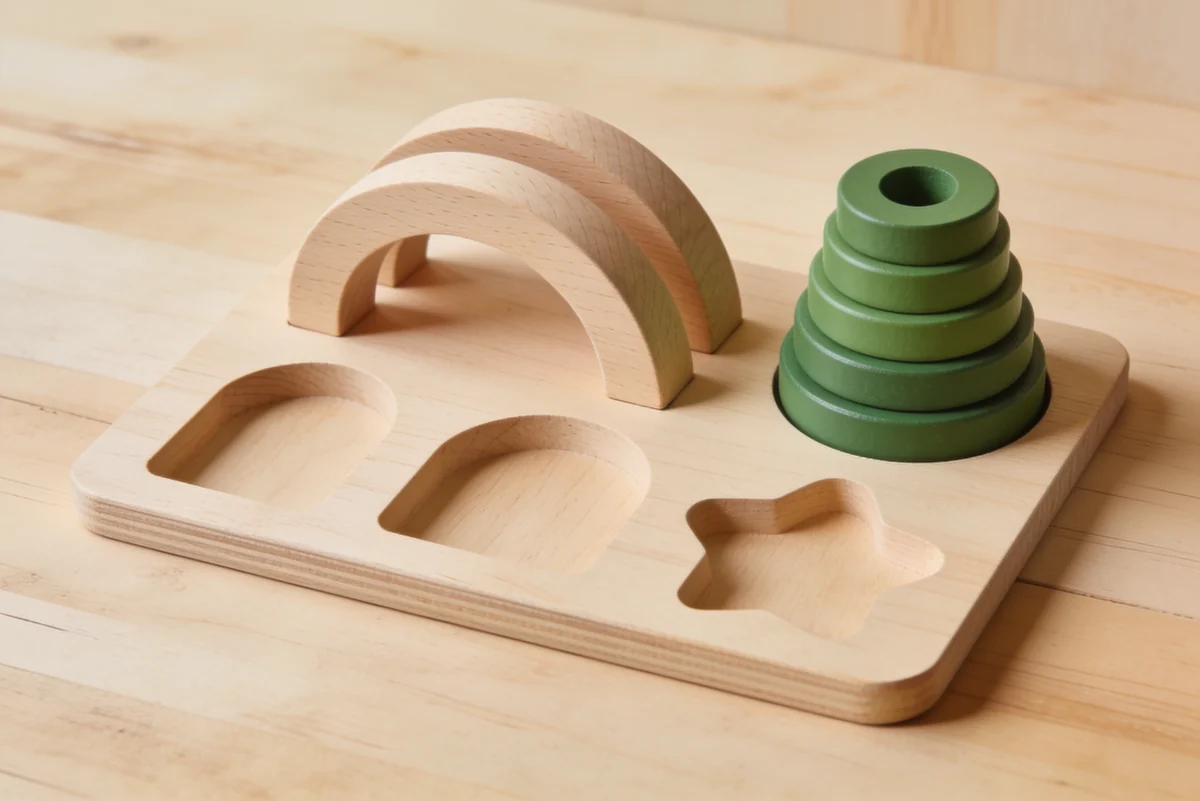
| Orchard Stacking Rings | base diameter 120 mm; height 180 mm; 6 rings diameter 50–110 mm | six decreasing ring sizes and rounded post; intended age 3+; no under-three suitability claim |
| Goods Train Set | three coupled cars total 360 × 65 × 90 mm; cord 250 mm; mass 620 g | locomotive and two detachable wagons; eight wheels; no magnets; age 3+; adult supervision |
| Balance Bridge Blocks | 12 blocks; largest 120 × 30 × 30 mm; smallest 30 × 30 × 30 mm; pack 180 × 140 × 60 mm | arches, columns and beams for balance constructions; age 3+; no developmental guarantee |
| Garden Peg Board | board 200 × 160 × 25 mm; 16 pegs diameter 22 mm × 45 mm | four-by-four peg field; no printed lettering; age 3+; count every removable part; adult supervision |
Allow room to rearrange
Leave a clear margin for sorting and moving pieces. Wooden constructions can extend beyond a pack footprint; the coupled train has its own total length. Puzzle count does not tell you the finished width. Use the product record for each comparison and keep removable pieces together when putting the activity away. Follow the intended age guidance and supervise play.
Ask about a particular record →