Puzzle size: from loose pieces to finished scene
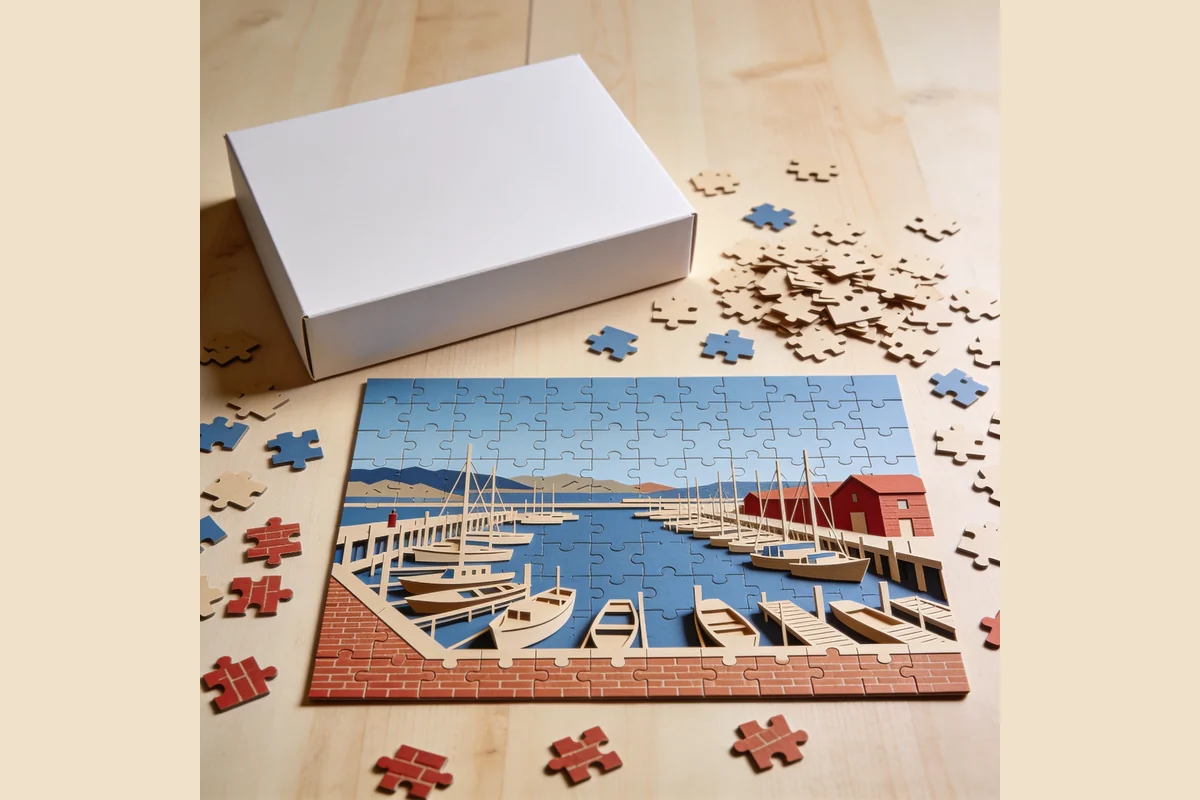
Start with the surface
Measure a clear rectangle using a ruler. Compare its width and height with the stated finished dimensions, leaving additional space for loose pieces. A box measurement describes storage, not the completed scene. Keep the surface stable and avoid edges where removable parts can fall.
Compare exact records
| Activity | Footprint and pieces | Guidance |
|---|---|---|
| Coastal Birds Puzzle | finished 300 × 220 mm; 48 pieces; box 180 × 130 × 45 mm | original bird-and-shore scene; no typography or licensed characters; age 5+; not for children under 3 |
| Garden at Dusk Puzzle | finished 400 × 300 mm; 100 pieces; box 220 × 160 × 45 mm | original plant silhouettes at dusk; age 6+; not for children under 3 |
| Woodland Paths Puzzle | finished 480 × 340 mm; 250 pieces; box 240 × 180 × 50 mm | original woodland winding paths; age 8+; no franchise artwork |
| Harbour Geometry Puzzle | finished 500 × 350 mm; 500 pieces; box 260 × 190 × 55 mm | original geometric boatyard panorama without people; age 10+ |
| Night Garden Puzzle | finished 680 × 480 mm; 1000 pieces; box 280 × 200 × 60 mm | original moonlit plant scene; age 12+; no luminous-effect promise |
Allow room to rearrange
Leave a clear margin for sorting and moving pieces. Wooden constructions can extend beyond a pack footprint; the coupled train has its own total length. Puzzle count does not tell you the finished width. Use the product record for each comparison and keep removable pieces together when putting the activity away. Follow the intended age guidance and supervise play.
Ask about a particular record →